GPT-5 Release: what you need to know
written by  Kage verse
updated on
3
#OpenAI
#Marketers
#Developers
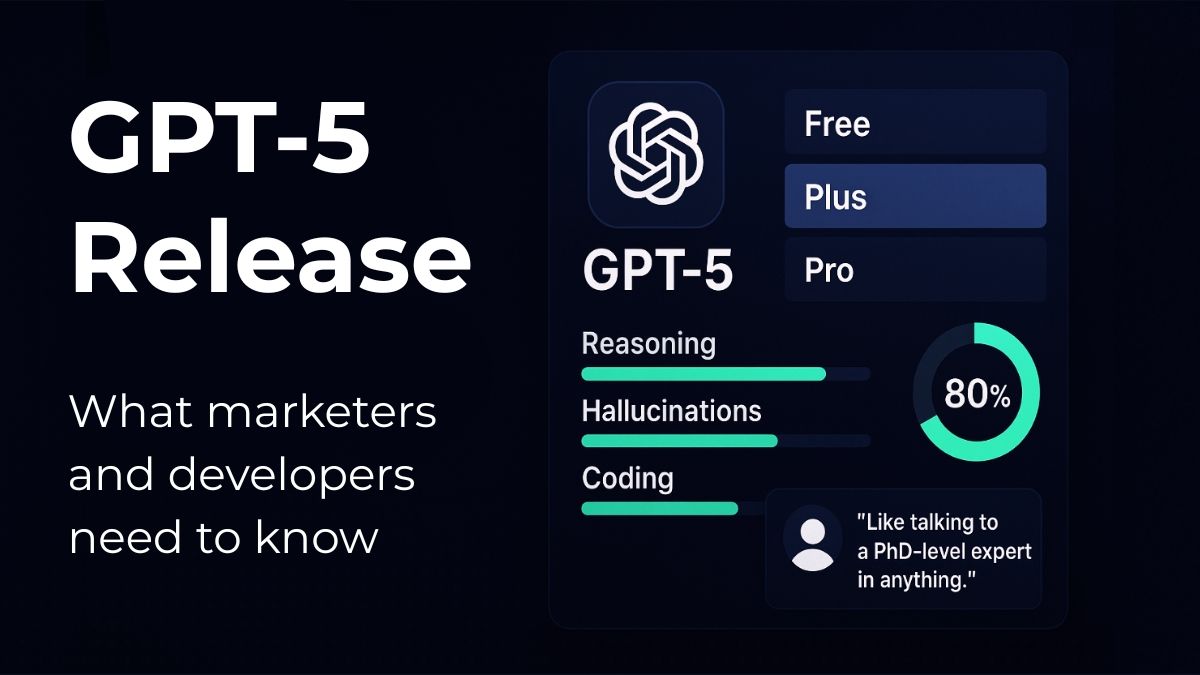
1. Smarter AI model
OpenAI has officially launched ChatGPT-5, a unified model that dynamically routes responses deciding whether to deliver quick replies or engage in deeper reasoning based on complexity.
It supports multimodal inputs (text, audio, video), boasts advanced coding, step by step reasoning, and safer, more factual responses.
2. Price and access
- Free users now gain access to GPT-5 (likely via a “mini” version) with usage limits.
- Plus and Pro subscribers enjoy higher limits, with Pro unlocking the full GPT-5 Pro for deeper reasoning (around $200/month).
- New personalization features allow setting conversation styles like “Cynic,” “Listener,” or “Robot,” and voice responses adapt to user mood.
3. Better accuracy
GPT-5 achieves 45–80% fewer mistakes than older models, provides clearer step by step breakdowns, and offers more contextually aware, less sycophantic responses.
Its enhanced reasoning and coding prowess make it more trustworthy in high-stakes contexts like legal, financial, and health advice (though it shouldn't replace professionals).
4. Internet reactions
CEO Sam Altman called GPT-5 “like talking to a PhD-level expert in anything,” though early testing highlighted a minor math error highlighting that even powerful AI still needs human oversight.
Some users expressed emotional backlash to the removal of GPT-4o: they described it as losing a friend, criticizing the change and demanding its return.
5. Why It matters
For marketers:
- Content creation: More accurate, longer form content, better visuals/audio integration, and style personalization sharpen engagement and brand voice.
- SEO & CX: Better reasoning improves customer interactions and trust signals; refined storytelling and tone can enhance conversions.
- Efficiency: Automation of ad copy, emails, research especially with long memory and reliability for complex tasks.
For developers:
- Coding efficiency: GPT-5 streamlines debugging, algorithm optimization, and even complete module generation with stronger logical reasoning.
- Complex applications: Expanded context window (up to 1M tokens) and multimodal support enable building smarter assistants, long-session bots, and dynamic tools.
- APIs and workflows: Enables pipelines for multimedia analysis, autonomous task handling, and safer decisioning logic.
Summary table
